 |
U.S Afghanistan Iran International |
 |
 |
|
Sustained Suppression of Girls` Education by the Taliban: Online Learning in the Darkness of Power Outages
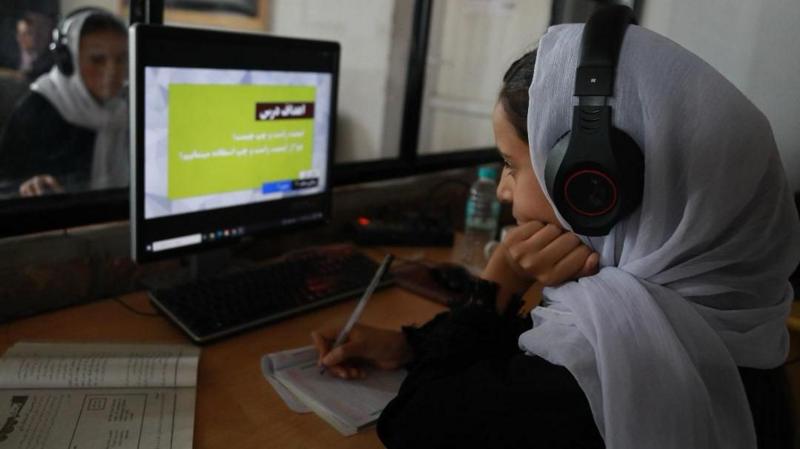
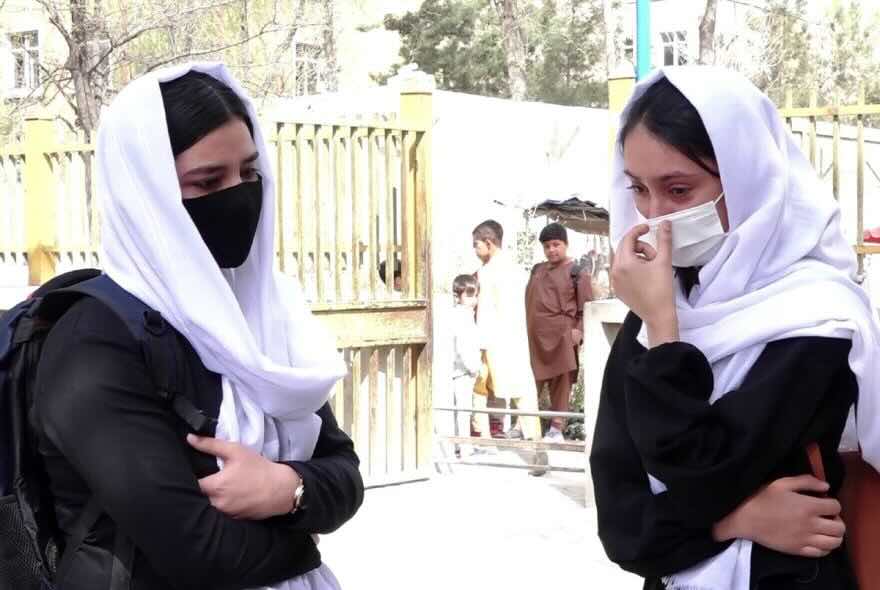
Four years after the Taliban`s return to power in August 2021, the deprivation of Afghan girls from in-person education has evolved beyond a temporary policy into a systematic structure. According to reports by international organizations, more than 1.4 million secondary school girls and female university students have been denied access to formal education. This ban-formalized in December 2022 with the closure of universities to women, following the earlier targeting of girls` secondary schools in 2021-has made Afghanistan the only country in the world to officially and broadly prohibit girls` education. According to AnsarPress, based on statistics from UNESCO (February 2026), only 17 percent of Afghan girls of secondary school age are able to continue their education, a figure that drops to below 5 percent in rural areas. Taliban decision-makers justify the policy by citing "compliance with Islamic principles" and "the lack of infrastructure readiness for gender segregation." However, Taliban officials within the Ministries of Education and Higher Education have informally acknowledged that internal divisions between moderate and hardline factions within the Taliban have obstructed the reopening of girls` schools. In this regard, the Afghan Ulema Council issued a statement in Dalwa 1404 (early 2026) declaring that "girls` education up to grade twelve is permissible under Sharia." Despite this endorsement, the ruling has not been translated into operational policy. Structural Challenges of Online Education in Afghanistan In response to the crisis, human rights groups and certain NGOs have attempted to develop online learning platforms for girls. However, this solution faces deep structural obstacles: 1. Limited Access to Digital Infrastructure: According to a January 2026 report by the International Telecommunication Union, only 19 percent of Afghan households have access to high-speed internet, a figure that drops to 4 percent in rural areas. Smartphone ownership among Afghan women averages 11 percent, compared to 43 percent among men, illustrating a significant gender digital divide. 2. Cultural and Security Restrictions: Many families, concerned about Taliban surveillance of online activities or influenced by traditional beliefs regarding the "inappropriateness" of women`s use of cyberspace, refrain from purchasing digital devices for their daughters. A report by the Afghanistan Strategic Studies Center (Mizan 1404) indicates that 68 percent of fathers in urban areas and 92 percent in rural areas prohibit their daughters from using the internet without direct male supervision. 3. Poverty and Economic Prioritization: With a poverty rate of 78 percent (according to a December 2025 report by the World Bank), purchasing a monthly internet package (equivalent to $5-8) ranks lower than securing bread and fuel for Afghan families whose average monthly income is approximately $40. In addition, frequent nationwide electricity outages-averaging 14 hours per day-have made sustained use of online educational platforms virtually impossible. 4. Low Quality of Educational Content: Most available educational platforms are designed in English or standardized Persian and do not adequately accommodate local Pashto and Dari dialects. Moreover, the absence of direct teacher interaction and performance assessment mechanisms limits effective learning. A February 2026 review by the Kabul Institute of Higher Education found that only 12 percent of girls participating in online courses were able to successfully pass standardized tenth-grade level examinations. Long-Term Social and Economic Consequences The widespread deprivation of education carries structural consequences for Afghanistan beyond the individual level. A November 2025 report by the World Bank warned that continuation of this policy could reduce Afghanistan`s GDP by 18 percent by 2035, as women-who comprised approximately 27 percent of the formal workforce prior to 2021-have been effectively excluded from the economic cycle. Furthermore, the rise in early marriage as a substitute for education has become a serious concern. According to data from UNICEF, the rate of marriage under age 18 in Afghanistan increased from 45 percent in 2021 to 63 percent in 2025. In response to the crisis, underground educational networks operating as "home schools" have become active in the cities of Kabul, Herat, and Mazar-e-Sharif, run by former female teachers. However, these initiatives face persistent risk of arrest. According to the Afghanistan Human Rights Network`s 1404 report, more than 80 female teachers were detained for unauthorized teaching, 23 of whom remain imprisoned by the Taliban. Education Ban: Afghan Girls in Search of Alternatives The deprivation of girls` education in Afghanistan is not merely an educational crisis but a systematic policy shaped by a combination of extremist ideology, weak state institutions, and the relative indifference of the international community, amounting to a humanitarian catastrophe. Online education, due to the absence of digital infrastructure, deep poverty, and cultural constraints, cannot substitute for in-person schooling and functions largely as a symbolic measure to ease global conscience. Without targeted international pressure directly tied to the Taliban`s economic interests-such as the gradual lifting of sanctions in exchange for reopening schools-the return of girls to classrooms is unlikely in the foreseeable future. Afghanistan risks confronting a generation of illiterate and disillusioned youth, undermining the foundations of any sustainable development.
|
 |
|
|
|
U.S
Afghanistan
Iran
International
Social
Economic
Articles |
Athletic
Read
Science
Medical
Interview
Art and Culture
Travel |
|